The federal government is considering making it a requirement for anyone who sells a newly built or pre-existing home in Canada to have an EnerGuide label for that home at the time of sale. Currently, EnerGuide labels are voluntary, but as part of the Canada Greener Homes Grant Initiative, they are exceptionally popular with Canadian homeowners, with some waiting up to a year to obtain the EnerGuide evaluation needed to obtain a label.

In early 2022, Ontario’s Housing Affordability Task Force released a series of 55 recommendations aimed at increasing the attainability of homes, for both rent and sale, across the province. Their very first recommendation, “[s]et a goal of building 1.5 million new homes in ten years” caught the eyes of policymakers, the media, and the general public.


During the 2022 election campaign, all four major provincial parties committed to this goal, including the re-elected Progressive Conservative government.

Canadians are directly connected to the drivers and solutions for climate change as consumers and voters, and as savers, investors, and pension holders. But while Canadians are increasingly concerned about the climate crisis, many are unaware of how their retirement savings may be backing industries or sectors with significant climate risks. 

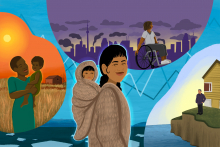
Climate change affects everybody and will only intensify in the coming years; however, it does not impact all people equally. Existing research around equity and climate change focuses predominantly on Global South contexts, while evidence relevant to the Canadian experience remains sparse. Closing this knowledge gap is critical to helping us first understand, and then address, the unique experiences of at-risk groups in a changing climate.

The London, Ontario area is experiencing rapid population growth. Some of the most talented and ambitious people from both inside Canada and abroad choose to make the region their home. The newcomers are an essential addition to the community, as they add to the cultural fabric and economic competitiveness of Elgin-Middlesex. Policymakers must ensure adequate infrastructure, from roads to schools to parks, to support that population. That also means ensuring enough housing is built to meet this increasing demand.

Date: March 16-17, 2022

Cost: Free

Location: Virtual

View the event recordings here.

From the middle of 2015 to the beginning of the pandemic, Ontario underwent a population boom, while housing completions rose only marginally. This mismatch between housing demand from demographic change and housing supply contributed to the rise in housing prices and the increase in the number of families moving in search of housing they could afford before the pandemic while also creating the conditions for the home price boom experienced during the pandemic.

The population forecasts underpinning Ontario's Growth Plan for the Greater Golden Horseshoe substantially underestimated population growth since 2016 from international sources, specifically immigration and international students, particularly in the Greater Toronto Area and Hamilton (GTAH) region. In just five years, Ontario's population of adults grew by several hundred thousand more than forecasted, each of whom needs a place to call home. 

Also available in French

The natural environment is important for human health. Greater access to parks, trees, and greenspaces in dense urban areas is linked to lower risks for several of the leading causes of morbidity and mortality in Canada. The Nature of Health explores the opportunity to leverage these connections and illustrates the role that nature-based solutions can have for building healthier and more resilient Canadian communities. 

December 4, 2019


The shift toward a low-pollution, innovative, resource-efficient economy is the opportunity of the century. The pursuit of a clean economy aims to simultaneously boost economic growth, by capturing growing clean market opportunities, and improve environmental performance, through innovation, efficiency and smart policies and investments – which together lead to better quality of life.

This report outlines eight reasons why accelerating this transition is the path to prosperity for Canada.